
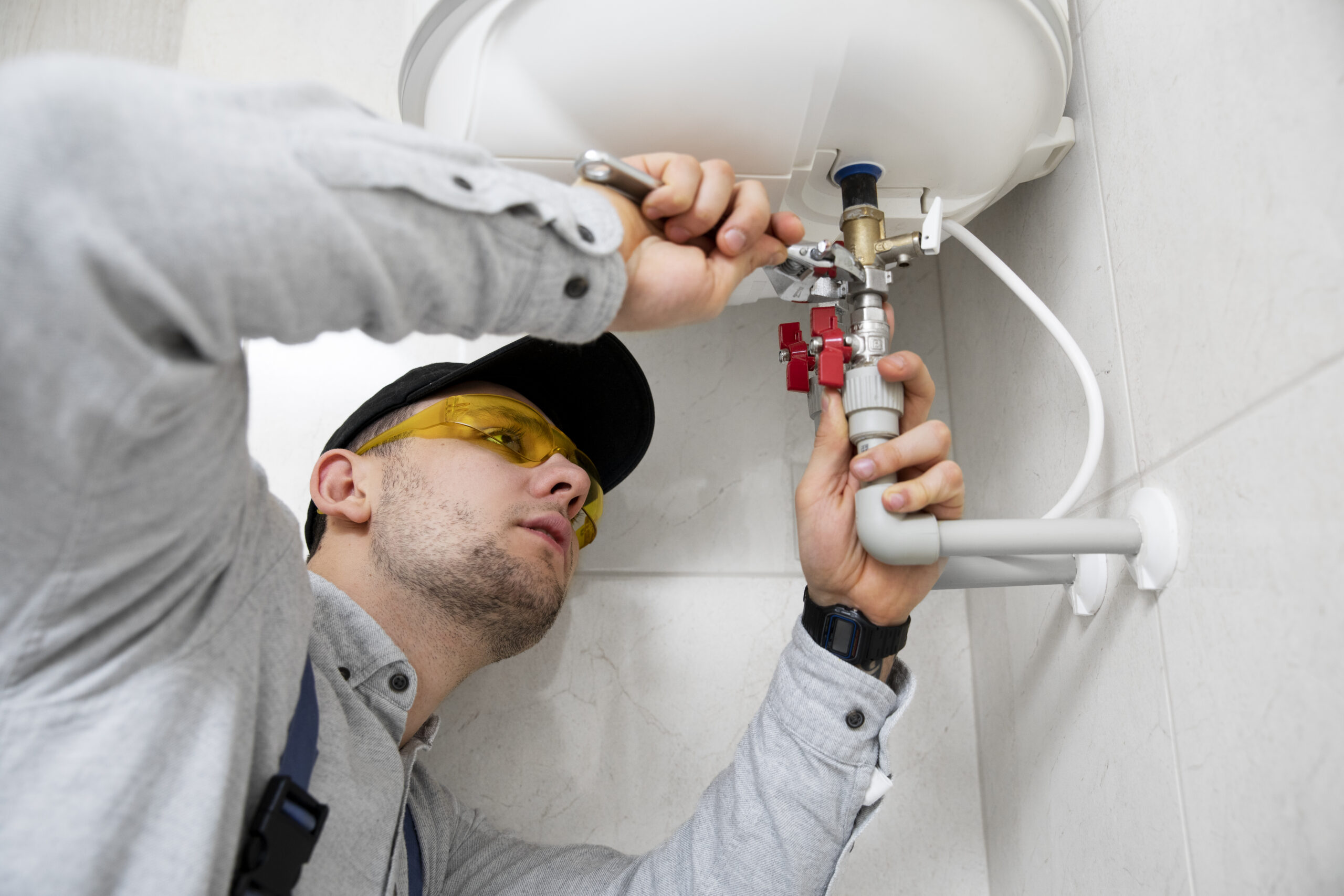
Quick answer: A leaking boiler is usually caused by a worn seal, a faulty pressure relief valve or a frozen condensate pipe. A small drip is not always an emergency, but it should be checked soon. Turn off the boiler, isolate the water if the leak is heavy, and call a Gas Safe engineer.
Finding a puddle under your boiler is stressful, especially as the weather turns cold. In this guide, we explain the most common causes, what you can safely do straight away and when to call us for boiler repair in Hertfordshire.
First, Check for These Emergency Signs
Stop using the boiler and call the National Gas Emergency Service on 0800 111 999 if you notice any of these:
- A smell of gas
- A carbon monoxide alarm sounding
- Black marks or soot around the boiler
- A lazy yellow or orange flame instead of a crisp blue one
If the leak is heavy or you cannot control it, our emergency plumbing team can help.
6 Common Causes of a Boiler Leaking
1. A Worn Pressure Relief Valve
This valve releases water if the pressure gets too high. When the seal wears, it can drip even at normal pressure. You may see water coming from a small copper pipe on the outside wall.
2. High Pressure From a Failed Expansion Vessel
The expansion vessel absorbs pressure as water heats up. If it fails, pressure climbs and the relief valve can discharge water. This is one of the most common reasons for a leak outside the house.
3. A Frozen or Blocked Condensate Pipe
Modern condensing boilers drain acidic water through a plastic pipe. In winter, that pipe can freeze and overflow, and the boiler often shuts down with a fault code. This is a very common winter problem.
4. A Faulty Pump Seal
The pump moves hot water around your system. A worn seal here causes a slow, steady drip, usually from the bottom of the boiler.
5. Loose or Damaged Pipe Joints
Sometimes the boiler is not the problem at all. A nearby joint or radiator valve may be the real source, and our plumbing services cover these repairs too.
6. Corrosion or a Cracked Heat Exchanger
In older boilers, internal parts wear out after years of use. A cracked heat exchanger is the most serious cause, and it often means replacing the part or the whole boiler.
Where Is the Water Coming From?
| What you see | Likely cause | How urgent? |
| Drip from a pipe on the outside wall | Pressure relief valve or expansion vessel | Book soon |
| Water near the base, slow and steady | Pump seal or internal seal | Book soon |
| Boiler shuts down in freezing weather | Frozen condensate pipe | Book soon |
| Heavy or fast leak | Burst pipe or major component failure | Emergency |
| Leak with a gas smell or CO alarm | Possible gas safety fault | Emergency, call 0800 111 999 |
What to Do If Your Boiler Is Leaking
- Turn the boiler off at its control panel so it stops running.
- Turn off the water if the leak is more than a drip. On many combi boilers, this means closing the filling loop or the mains isolation valve.
- Switch off the power at the fuse box, but only if you can reach it safely. Never touch electrics while standing in water.
- Mop up the water to protect floors and nearby fittings.
- Take a photo of where the leak starts. It helps our engineer diagnose the fault faster.
Please do not remove the boiler casing or try internal repairs. Boilers hold pressurised water and gas components, so this work needs a Gas Safe engineer.
Is a Leaking Boiler Dangerous?
A small leak is not always an immediate danger, but we never recommend ignoring one. Water near electrical parts is a real risk, and a steady leak can make pressure drop until your heating stops working. Left alone, it can also damage floors, walls and cupboards, which adds to the final cost.
When to Call a Gas Safe Engineer
Book a visit as soon as possible if:
- The leak is steady or getting worse
- You cannot see where the water is coming from
- The leak is near wiring or electrical parts
- Your boiler shows a fault code or keeps losing pressure
- The boiler is more than 10-12 years old and leaks more than once
At LRT Heating, our engineers find the real cause first, then explain your options before any work starts. Our boiler repair service covers every cause listed above, with fixed pricing and a 12-month workmanship guarantee. If the boiler is beyond repair, we can talk you through a new boiler installation.
How to Prevent Leaks This Winter
- Book a yearly boiler service so seals, valves and pressure levels are checked.
- Insulate the condensate pipe if it runs outside.
- If radiators heat unevenly, ask us about a power flush, as sludge can strain your system.
- Join one of our boiler care plans to spread the cost of regular checks.
Frequently Asked Questions
1. Is a small drip from my boiler an emergency?
Not usually, but have it checked soon. A small leak can get worse, and it may point to a failing part.
2. Can I fix a boiler leak myself?
No. Only a Gas Safe registered engineer should carry out internal repairs.
3. Why is my boiler leaking but not losing pressure?
The leak may be very slow, or the water may be coming from a nearby pipe or radiator valve. An engineer can trace it quickly.
4. Can I still use a leaking boiler?
We advise against it. Turn it off until an engineer has checked it, especially if the water is near electrics.
5. How much does it cost to fix a leaking boiler?
It depends on the cause. A seal or valve is usually a quicker and cheaper fix than a major part. We give you a clear price before any work begins.
6. Do you cover boiler repairs across Hertfordshire?
Yes. We cover areas including Hoddesdon, Broxbourne, Hertford and Welwyn Garden City, and we work seven days a week.
Boiler Leaking? Get Fast Boiler Repair in Hertfordshire
Don’t wait for a small drip to become a big bill. Our team is ready to find the cause and fix it properly.
Call us on 01438 601616 or get a free quote today.