
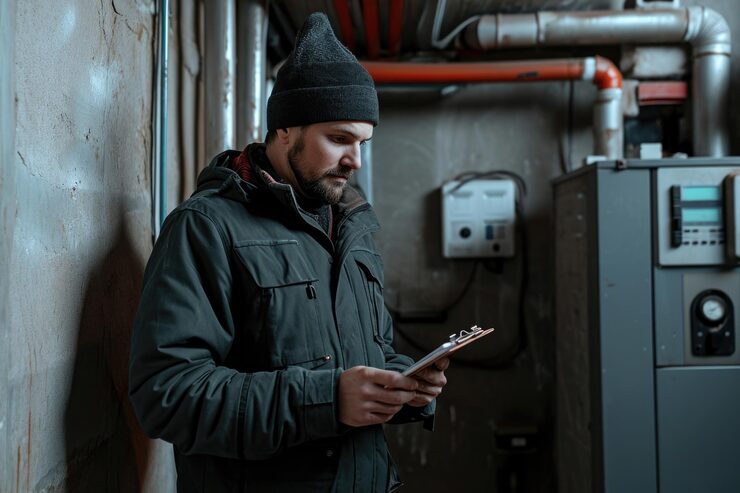
Quick answer: The best time to prepare your boiler for winter is before temperatures drop and your heating system starts working harder. Checking your boiler pressure, testing your radiators, insulating exposed pipes and arranging an annual service can help identify potential problems before the cold weather arrives.
Use this winter boiler checklist to prepare your home, improve heating reliability and understand when to call a qualified professional.
- Book an annual boiler service if one is due.
- Check your boiler pressure against the manufacturer’s instructions.
- Look for cold spots on radiators and bleed them if necessary.
- Insulate exposed pipes in unheated areas.
- Test your heating and thermostat before temperatures drop.
- Listen for unusual noises and look for warning signs.
- Keep a qualified heating engineer’s contact details handy.
Why Should You Prepare Your Boiler Before Winter?
Your heating system may remain relatively unused during warmer months. When temperatures fall, you begin relying on it more frequently, making autumn a practical time to identify potential problems.
A boiler that struggles to maintain pressure, radiators that heat unevenly or a thermostat that fails to respond can affect your home’s comfort during colder weather.
Preparing in advance gives you more time to arrange servicing or repairs without waiting until you urgently need heating. Regular maintenance can also help your system operate as intended and identify issues that may affect its efficiency.
1. Book Your Annual Boiler Service
An annual boiler service is an important part of keeping your heating system in good condition. A qualified heating engineer can inspect the boiler, check its operation and identify potential faults.
If your last service was more than 12 months ago, or you are unsure when it was completed, consider arranging an appointment before winter.
A professional service can help to:
- Identify signs of wear or developing faults.
- Check the boiler’s operation and relevant safety components.
- Assess whether the system is operating as intended.
- Identify maintenance or repairs that may be needed.
- Help you meet servicing requirements specified by your manufacturer.
Regular servicing does not guarantee that a boiler will never break down. However, it is an important preventative measure that can help you address issues before they become more disruptive.
Check your boiler warranty terms, as the servicing requirements vary between manufacturers.
2. Check Your Radiators for Cold Spots
Radiators should heat reasonably evenly when your central heating is operating normally. If the top of a radiator remains cold while the lower section becomes warm, trapped air may be preventing heat from circulating properly.
You can check your radiators by turning on the heating and allowing them time to warm up.
Look out for:
- Cold areas at the top of a radiator.
- Radiators that take unusually long to warm up.
- Some rooms feeling colder than others.
- Gurgling sounds coming from the heating system.
If trapped air is the likely cause, bleeding the radiator may help. Follow the radiator manufacturer’s instructions, turn the heating off and allow the radiator to cool before starting.
Bleeding can lower system pressure, so check the boiler gauge afterwards and follow the manufacturer’s guidance if pressure needs adjusting. If you are unsure how to do this safely, contact a heating engineer.
If radiators remain cold after bleeding, the cause may be something else, such as a circulation problem or a need for system balancing.
3. Check Your Boiler Pressure
Boiler pressure is important for many domestic sealed central heating systems. If it falls outside the recommended range, the heating may not operate correctly.
Many domestic boilers have a typical cold pressure of around 1–1.5 bar, but the correct range depends on the boiler and heating system. Always consult your manufacturer’s instructions.
Before winter, check the pressure gauge or digital display and look for any warning messages.
Keep these points in mind:
- Check the reading against the recommended range in your boiler manual.
- If the pressure is low, follow the manufacturer’s instructions rather than guessing how to refill the system.
- If pressure repeatedly drops, arrange a professional inspection to investigate the cause.
- If pressure rises unusually high, seek advice from a qualified heating engineer.
Repeatedly topping up a boiler without investigating recurring pressure loss may leave an underlying problem unresolved.
If you notice persistent pressure changes, leaks or recurring boiler faults, professional advice can help identify the cause.
If your boiler pressure keeps dropping, read our guide to understanding boiler pressure problems and when to seek professional help.
4. Insulate Exposed Pipes Before Temperatures Drop
Frozen pipes can prevent heating from operating properly and may crack, creating the risk of water damage when they thaw.
Pipes in unheated areas are particularly vulnerable during freezing weather. These may include pipes in lofts, garages, outbuildings and areas close to external walls.
To reduce the risk:
- Inspect exposed pipes for missing or damaged insulation.
- Fit suitable pipe insulation, commonly called lagging, where needed.
- Pay particular attention to pipes in unheated spaces.
- Follow the boiler manufacturer’s guidance on frost protection.
- Check vulnerable areas after particularly cold weather.
Keeping your heating running may provide some protection in certain circumstances, but it is not a substitute for proper insulation. Boiler frost-protection functions also have limitations and may not protect every pipe in the property.
If you are leaving your home for an extended period during winter, seek advice on appropriate heating and frost-protection settings for your system.
5. Test Your Heating Before You Need It
One of the simplest ways to prepare for winter is to test your heating before the first cold spell.
Switch the heating on using the normal controls and allow the system time to warm up. Check whether your radiators heat up and whether the thermostat responds as expected.
During your check, look out for:
- Radiators that remain cold or heat unevenly.
- Unusual banging, gurgling or other persistent noises.
- Boiler warning lights or fault codes.
- Heating that switches off unexpectedly.
- Rooms that struggle to reach the selected temperature.
Do not ignore recurring problems or assume that unusual noises are normal. If the boiler displays a fault code, consult its manual and contact a qualified engineer when necessary.
Testing your heating early gives you time to investigate faults before you depend on it every day.
6. Check Your Thermostat and Heating Controls
Your thermostat helps regulate your home’s temperature. If it is not working correctly, your heating may fail to reach the desired temperature or operate when it is not needed.
Before winter, check that your thermostat display is working and that the heating responds when you adjust the settings.
You should also:
- Replace batteries if your wireless thermostat requires them.
- Check that the programmed heating schedule is correct.
- Confirm that smart heating controls connect to their app, if applicable.
- Make sure the thermostat is responding to temperature changes.
If your controls appear to work but the heating does not respond, the issue may involve the boiler, wiring or heating system rather than the thermostat itself.
Consult the manufacturer’s instructions or arrange professional help if the problem continues.
7. Know Who to Contact if Your Boiler Breaks Down
Even a well-maintained boiler can develop a fault. Knowing who to contact before winter can make it easier to arrange assistance when something goes wrong.
Save the contact details of a suitably qualified heating engineer and check what services are available in your area.
It is also worth reviewing your existing boiler care arrangements. Depending on the terms, a care plan may cover certain repairs or provide access to assistance, but coverage, exclusions, fees and response times vary.
If your boiler develops a fault, check the displayed error code and consult the manufacturer’s troubleshooting guidance. If the problem persists, contact a professional for boiler repair services from LRT Heating. Avoid removing the boiler casing or attempting internal repairs.
For gas boiler work, use a Gas Safe registered engineer with the appropriate qualifications for the work required.
If you suspect a gas leak, do not attempt to troubleshoot the boiler. Leave the property, avoid flames and electrical switches, and contact the UK Gas Emergency Service on 0800 111 999 from a safe location. If a carbon monoxide alarm sounds or you suspect exposure, get everyone outside into fresh air and seek emergency assistance.
Frequently Asked Questions
1. When should I prepare my boiler for winter?
Early autumn is a good time to check your heating system, arrange any overdue servicing and inspect exposed pipes. Preparing before temperatures fall gives you more time to address potential problems.
2. How often should a boiler be serviced?
An annual service is generally recommended for domestic boilers. Follow your manufacturer’s instructions and warranty requirements, and use an appropriately qualified heating engineer.
3. What boiler pressure should I have before winter?
Many domestic sealed heating systems have a typical cold pressure of around 1–1.5 bar. However, the correct range varies, so check your boiler manual. If pressure keeps dropping or rises unusually high, arrange a professional inspection.
4. Can I check my boiler myself?
You can carry out basic external checks, such as looking at the pressure display, testing the thermostat and checking for warning codes. Do not remove the boiler casing or attempt internal repairs. Use a qualified engineer for servicing and repair work.
5. What should I do if my boiler stops working in winter?
Check the boiler display and consult the manufacturer’s troubleshooting instructions. If there is a routine fault, contact a qualified heating engineer. If you suspect a gas leak or carbon monoxide exposure, leave the property and follow the appropriate emergency guidance.
6. Is a boiler care plan worth considering before winter?
A boiler care plan may be useful if you want help managing eligible repair costs or arranging assistance. Compare the price, exclusions, excess charges, repair limits and response-time terms before choosing a plan.
Prepare Your Heating for Winter with LRT Heating
Getting your heating system ready before the cold weather arrives can help you identify potential problems and make your home more comfortable throughout winter.
From arranging an annual boiler service to investigating heating faults, taking action early can reduce the risk of unexpected disruption.
If your boiler needs attention or your heating is not working as expected, contact LRT Heating to discuss your requirements and the services available in your area.
Arrange your boiler service or request a quote today.
Call LRT Heating on 01438 601616.